
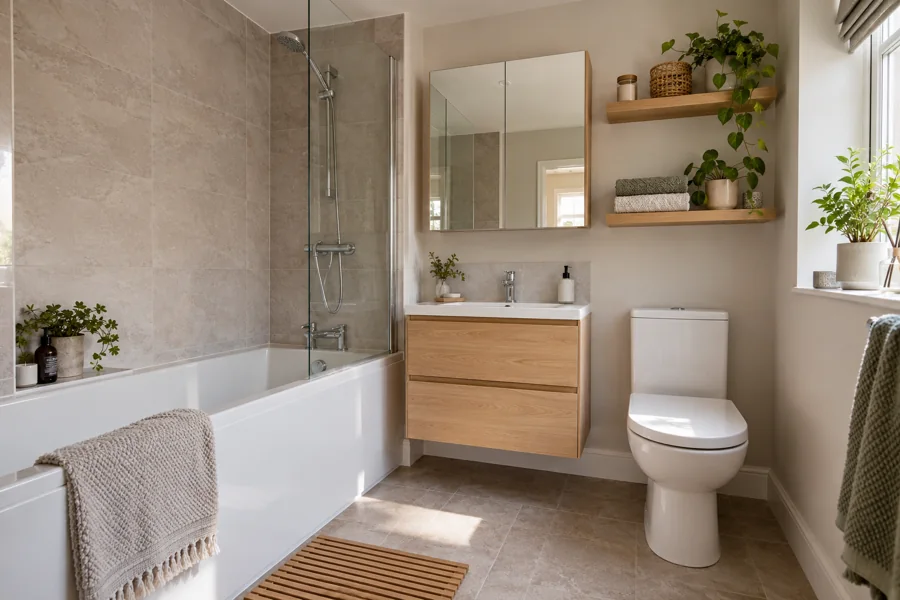
Begin with the room you actually have
Before choosing the new suite, make a short list of what happens in the current bathroom. Note leaks you have noticed, loose finishes, awkward doors or a shower that is difficult to use. Describe the symptoms plainly. You do not need to decide whether the cause is plumbing, a surface problem or the product itself.
These details give the first discussion a useful starting point. Keep photographs of the room and a few examples of the look you prefer. For an Aberdeen installation, planning from the real room helps avoid choosing a layout that ignores a visible problem or assumes that every existing surface is ready to receive new fittings without further work.
Choose a layout before a shopping list
The main fittings need to work together when someone is using the room. Check the way the door opens, the space in front of the basin and the entrance to the bath or shower. A product can fit between two walls yet still leave an awkward room to move around.
Our bathroom installation service connects the layout with the fitting work. Moving the toilet, basin or shower can mean changing pipes and repairing the surrounding walls or floor. We can compare keeping suitable existing positions with a different layout. Choose the arrangement that gives you the bathing space and storage you need, with the work and price explained.
Deal with the large decisions first
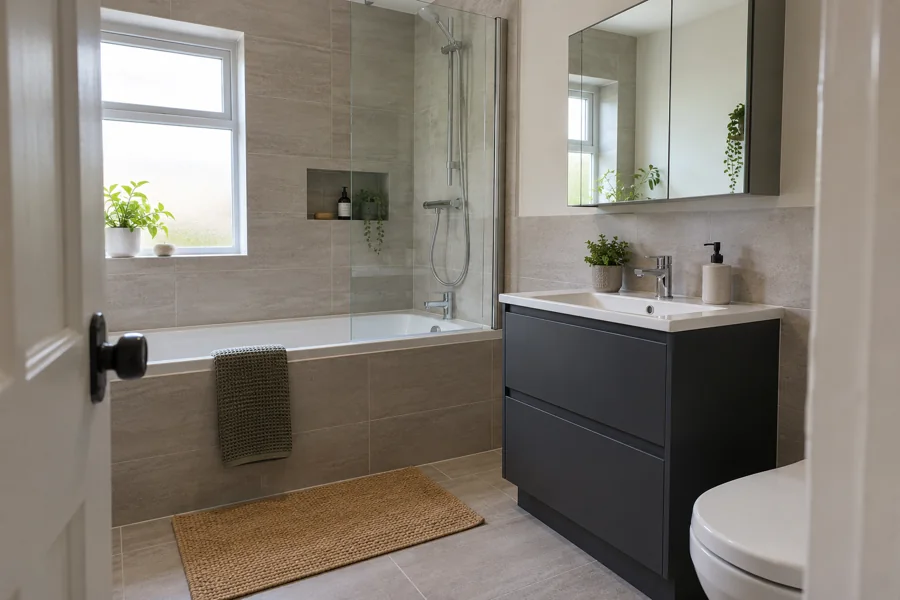
Decide whether the room needs a bath, a separate shower or a shower over the bath before choosing small accessories. That decision changes the available space for a vanity and storage. Consider who uses the room and whether it is the only bathing facility in the home.
Next, choose the basin and storage arrangement. Think about drawer openings and the items that need to be close at hand. Only then settle the details that depend on these positions, such as the mirror and towel storage. This order does not remove personal choice; it helps keep the attractive finishing touches connected to a room that is comfortable to use every day.
Discuss what cannot be seen yet
Parts of a bathroom remain hidden until the old fittings or finishes are removed. Ask how the installer will explain anything found at that stage and how a change would be agreed. Knowing that process in advance is more useful than assuming that every possible repair can be predicted from a first look.
Tell us about previous alterations if you know about them, but do not disturb finishes or try to expose pipework yourself for the visit. Keep any useful product information or previous repair notes available. The plan should distinguish known preparation from work that depends on what is found, with a clear conversation before an unexpected repair becomes part of the job.
Make a practical access plan
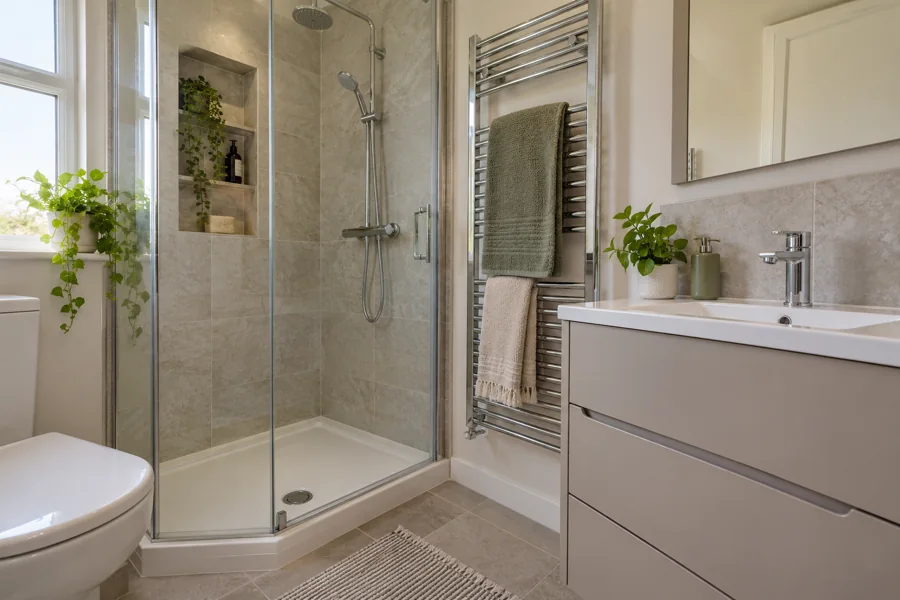
Materials and the old suite need a route through the home. Mention shared stairs, limited parking or a narrow doorway, and discuss where agreed materials can be kept. Ask what personal belongings need moving before work begins. Clearing the bathroom cupboards is different from deciding where large deliveries can safely wait.
If you have only one bathroom, raise that immediately. Discuss which facilities may be unavailable and what temporary arrangements need making for the actual work. Avoid planning around a fixed number of days taken from another household's installation. The condition of your room, the chosen work and the sequence of fitting all need to be understood before making personal arrangements.
Keep choices and changes visible
A simple record of the agreed products and finishes helps keep everyone working towards the same room. Include the sizes and versions that matter, particularly for the shower, vanity and bath screen. If you want to substitute a product, discuss it before ordering so that suitability and fitting implications can be checked.
The accompanying bathroom cost guide explains what to check in the quotation. Keep any later changes with the same record. Ask why a repair is needed, how it affects the finish and what it costs. If you choose an upgrade, have the new product and price recorded too, so everyone can see which version of the bathroom has been agreed.
Plan for using the finished bathroom
Completion is a useful time to learn how the fitted items work. Ask about shower controls, care of the selected surfaces and anything that needs leaving before normal use. Follow the information for the actual products installed rather than applying a cleaning tip intended for a different material.
Keep the relevant product documents and a clear contact for questions. Look around the room while the work can be explained: cupboard openings, screen movement and access for cleaning are all worth understanding. The purpose is a straightforward handover that helps you enjoy the bathroom and notice anything that needs attention, without expecting you to inspect concealed construction or diagnose technical faults yourself.
Prepare your Aberdeen bathroom with us
Bring your priorities and any concerns about the existing room. We can discuss the layout, preparation and installation as one planned bathroom rather than a series of separate purchases.